学校英语笔记
教材:上海教育出版社
单词记忆方法
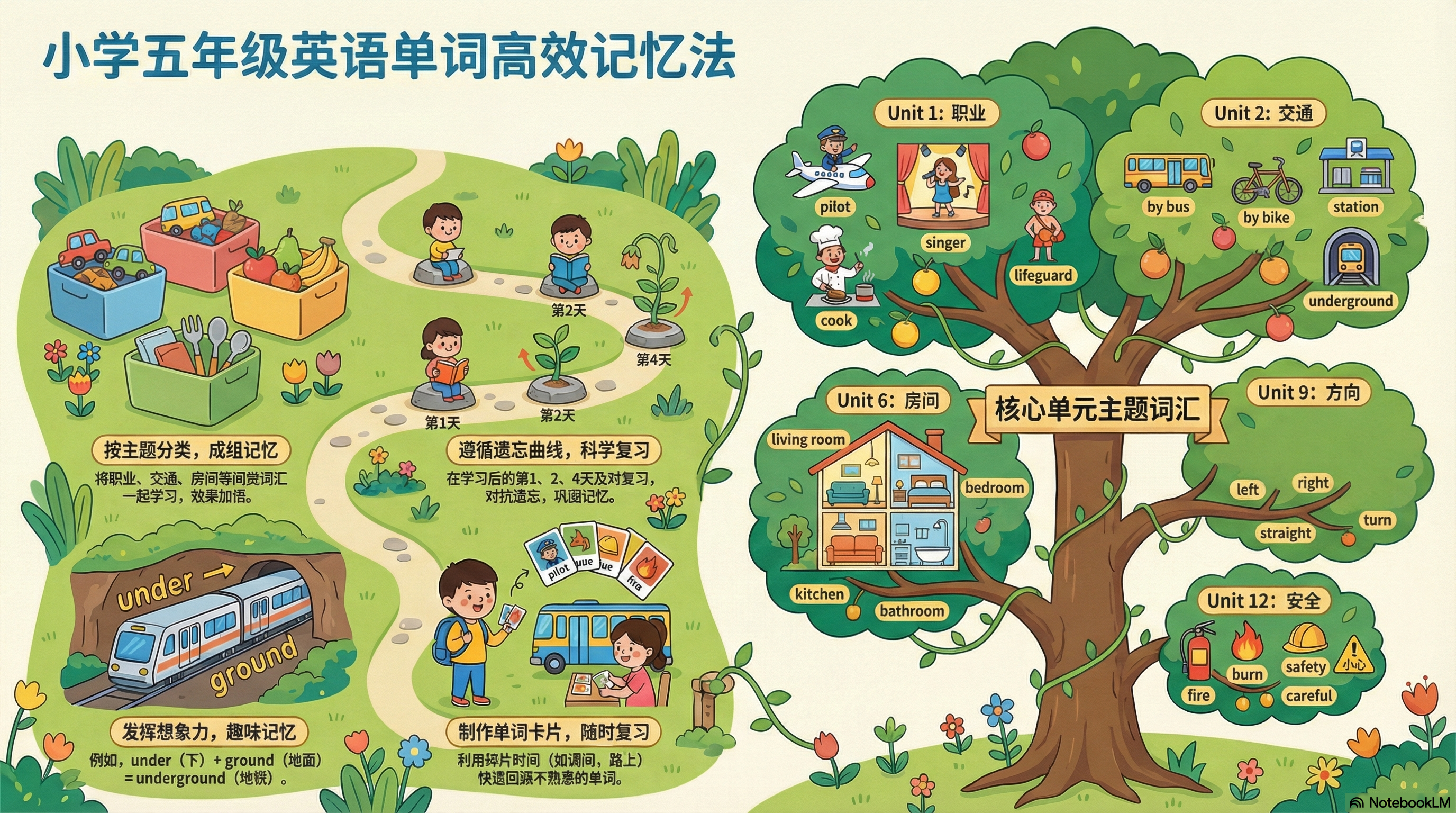
1. 分类记忆法(按主题分组)
将单词按主题分类,同类单词一起记忆效果更好:
- Unit 1: 职业类(pilot, cook, singer, lifeguard)
- Unit 2: 交通类(by bus, by bike, station, underground)
- Unit 3: 序数词(first, second, third…)
- Unit 4: 频率副词(usually, often, sometimes, always, never)
- Unit 5: 日常交流类(clever, same, class, ask, answer, each other)
- Unit 6: 房间类(living room, bedroom, kitchen, bathroom)
- Unit 7: 度假类(beach, sunshine, shell, sea)
- Unit 8: 远足探险类(outing, map, hill, find, diamond, lake)
- Unit 9: 方向类(left, right, straight, turn)
- Unit 10: 副词类(gently, softly, strongly, slowly, quickly)
- Unit 11: 生活自然类(tap, use, vegetable, farmer, mountain, tree)
- Unit 12: 安全类(fire, burn, safety, careful)
2. 艾宾浩斯遗忘曲线复习法
根据遗忘曲线规律,科学安排复习时间:
- 第1天:学习 Unit 1-4
- 第2天:复习 Unit 1-4,学习 Unit 5-8
- 第3天:复习 Unit 1-8,学习 Unit 9-12
- 第4天:全面复习,重点攻克薄弱单元
3. 联想记忆法
通过联想帮助记忆:
- 词根联想:
underground= under(下)+ ground(地面)= 地铁 - 音形联想:
journey听起来像”就你”,想象”旅程就你一个人” - 场景联想:
living room(客厅)→ 生活的地方
4. 卡片记忆法
- 制作单词卡片:正面英文,背面中文
- 快速过一遍,把会的放一边,不会的反复看
- 利用碎片时间(上学路上、课间)复习
5. 口诀记忆法
- 序数词规律:
first, second, third特殊记,fourth开始加-th - 频率副词排序:
always > usually > often > sometimes > never
6. 重点攻克难点单词
- 长单词:
favourite,interesting,thirteenth,twenty-first - 易混淆:
bringvsthing,quiet(/ˈkwaɪət/) vsquite(/kwaɪt/) - 短语:
(be) good at,have a good time,each other
7. 实战练习建议
- 每天默写1-2个单元
- 用单词造句,加深理解
- 找同学互相听写,互相纠正
8. 考前冲刺(最后1-2天)
- 快速浏览所有单词,标记不熟悉的
- 重点复习标记的单词
- 做模拟测试,查漏补缺
英语五年级上册单词
Unit 1
Title: My future Category: 职业类
- future /ˈfjuːtʃə/ 将来;未来
- 例句:I want to be a teacher in the future. (我将来想成为一名老师。)
- want /wɒnt/ 想要
- 例句:I want an apple. (我想要一个苹果。)
- pilot /ˈpaɪlət/ 飞行员
- 例句:My uncle is a pilot. (我叔叔是一名飞行员。)
- 记忆:pilot 开飞机,pilot 很厉害!
- teach /tiːtʃ/ 教(课)
- 例句:My teacher teaches English. (我的老师教英语。)
- cook /kʊk/ 厨师;烹饪
- 例句:My mother is a good cook. (我妈妈是个好厨师。)
- taxi driver /ˈtæksi ˈdraɪvə/ 出租车司机
- 例句:The taxi driver is very friendly. (出租车司机很友好。)
- 记忆:taxi(出租车)+ driver(司机)= taxi driver
- job /dʒɒb/ 工作;职业
- 例句:What’s your job? (你的工作是什么?)
- singer /ˈsɪŋə/ 歌手
- 例句:She wants to be a singer. (她想成为一名歌手。)
- 记忆:sing(唱歌)+ er(人)= singer(歌手)
- fall /fɔːl/ 掉落;落下
- 例句:The apple falls from the tree. (苹果从树上掉下来。)
- lifeguard /ˈlaɪfɡɑːd/ 救生员
- 例句:The lifeguard helps people at the beach. (救生员在海滩帮助人们。)
- 记忆:life(生命)+ guard(守卫)= lifeguard(救生员)
- save /seɪv/ 救;救助;节约
- 例句:The lifeguard saves people. (救生员救人。)
- become /bɪˈkʌm/ 变成;变得
- 例句:I want to become a doctor. (我想成为一名医生。)
- (be) good at /biː ɡʊd æt/ 擅长
- 例句:I am good at English. (我擅长英语。)
Unit 2
Title: Going to school Category: 交通类
- by /baɪ/ (表示方式);靠近
- 例句:I go to school by bus. (我乘公共汽车去学校。)
- walk /wɔːk/ 走;步行
- 例句:I walk to school every day. (我每天步行去学校。)
- Ms /mɪz/ 女士
- 例句:Ms Wang is my teacher. (王女士是我的老师。)
- journey /ˈdʒɜːni/ 旅程;旅行
- 例句:It’s a long journey. (这是一次长途旅行。)
- primary school /ˈpraɪməri skuːl/ 小学
- 例句:I study at a primary school. (我在小学学习。)
- 记忆:primary(初级的)+ school(学校)= primary school(小学)
- underground /ˈʌndəɡraʊnd/ 地铁
- 例句:I take the underground to school. (我乘地铁去学校。)
- 记忆:under(下)+ ground(地面)= underground(地铁)
- station /ˈsteɪʃən/ 车站
- 例句:The train station is big. (火车站很大。)
- take /teɪk/ 乘坐(交通工具);带领
- 例句:I take the bus to school. (我乘公共汽车去学校。)
- after /ˈɑːftə/ 在……后
- 例句:I do homework after school. (放学后我做作业。)
- hour /ˈaʊə/ 小时
- 例句:I sleep for eight hours. (我睡八小时。)
- bus stop /bʌs stɒp/ 公共汽车站
- 例句:I wait at the bus stop. (我在公共汽车站等车。)
- 记忆:bus(公共汽车)+ stop(站)= bus stop
- by bus /baɪ bʌs/ 乘公共汽车
- 例句:I go home by bus. (我乘公共汽车回家。)
- far from /fɑː frɒm/ 离……远
- 例句:My school is far from my home. (我的学校离我家很远。)
- on foot /ɒn fʊt/ 步行
- 例句:I go to the park on foot. (我步行去公园。)
- by bike /baɪ baɪk/ 骑自行车
- 例句:I go to school by bike. (我骑自行车去学校。)
- by car /baɪ kɑː/ 乘小汽车
- 例句:My father goes to work by car. (我爸爸开车去上班。)
- get off /ɡet ɒf/ 下车
- 例句:I get off the bus at the school. (我在学校下车。)
Unit 3
Title: My birthday Category: 序数词
- party /ˈpɑːti/ 聚会
- 例句:I go to a birthday party. (我去参加生日聚会。)
- when /wen/ 什么时候
- 例句:When do you go to school? (你什么时候去学校?)
- begin /bɪˈɡɪn/ 开始
- 例句:The class begins at eight. (课在八点开始。)
- bring /brɪŋ/ 带来
- 例句:Please bring your book. (请带上你的书。)
- 记忆:bring(带来)和 thing(东西)容易混淆,bring 是动作
- thing /θɪŋ/ 东西;事物
- 例句:This is a nice thing. (这是一个好东西。)
- 记忆:thing(东西)和 bring(带来)容易混淆,thing 是名词
- favourite /ˈfeɪvərɪt/ 最喜欢的
- 例句:Apple is my favourite fruit. (苹果是我最喜欢的水果。)
- interesting /ˈɪntrəstɪŋ/ 有趣的
- 例句:This book is very interesting. (这本书很有趣。)
- hat /hæt/ 帽子
- 例句:I wear a red hat. (我戴一顶红帽子。)
- have fun /hæv fʌn/ 尽情玩
- 例句:We have fun at the party. (我们在聚会上玩得很开心。)
- first /fɜːst/ 第一
- 例句:I am the first in the race. (我在比赛中得了第一。)
- second /ˈsekənd/ 第二
- 例句:He is the second student. (他是第二个学生。)
- third /θɜːd/ 第三
- 例句:Today is the third day. (今天是第三天。)
- fourth /fɔːθ/ 第四
- 例句:Today is the fourth day. (今天是第四天。)
- 记忆:four(四)+ th = fourth(第四)
- fifth /fɪfθ/ 第五
- 例句:This is the fifth book. (这是第五本书。)
- 记忆:five(五)→ fifth(第五),注意 ve 变 f 再加 th
- sixth /sɪksθ/ 第六
- 例句:I am in the sixth grade. (我在六年级。)
- 记忆:six(六)+ th = sixth(第六)
- seventh /ˈsevənθ/ 第七
- 例句:This is the seventh month. (这是第七个月。)
- 记忆:seven(七)+ th = seventh(第七)
- eighth /eɪtθ/ 第八
- 例句:Today is the eighth day. (今天是第八天。)
- 记忆:eight(八)+ th = eighth(第八),注意只有一个 t
- ninth /naɪnθ/ 第九
- 例句:This is the ninth lesson. (这是第九课。)
- 记忆:nine(九)→ ninth(第九),去掉 e 加 th
- tenth /tenθ/ 第十
- 例句:This is the tenth question. (这是第十个问题。)
- 记忆:ten(十)+ th = tenth(第十)
- eleventh /ɪˈlevənθ/ 第十一
- 例句:Today is the eleventh day. (今天是第十一天。)
- 记忆:eleven(十一)+ th = eleventh(第十一)
- twelfth /twelfθ/ 第十二
- 例句:This is the twelfth month. (这是第十二个月。)
- 记忆:twelve(十二)→ twelfth(第十二),注意 ve 变 f 再加 th
- thirteenth /ˌθɜːˈtiːnθ/ 第十三
- 例句:Today is the thirteenth day. (今天是第十三天。)
- 记忆:thirteen(十三)+ th = thirteenth(第十三)
- fourteenth /ˌfɔːˈtiːnθ/ 第十四
- 例句:This is the fourteenth lesson. (这是第十四课。)
- 记忆:fourteen(十四)+ th = fourteenth(第十四)
- fifteenth /ˌfɪfˈtiːnθ/ 第十五
- 例句:Today is the fifteenth day. (今天是第十五天。)
- 记忆:fifteen(十五)+ th = fifteenth(第十五)
- sixteenth /ˌsɪkˈstiːnθ/ 第十六
- 例句:This is the sixteenth question. (这是第十六个问题。)
- 记忆:sixteen(十六)+ th = sixteenth(第十六)
- seventeenth /ˌsevənˈtiːnθ/ 第十七
- 例句:Today is the seventeenth day. (今天是第十七天。)
- 记忆:seventeen(十七)+ th = seventeenth(第十七)
- eighteenth /ˌeɪˈtiːnθ/ 第十八
- 例句:This is the eighteenth lesson. (这是第十八课。)
- 记忆:eighteen(十八)+ th = eighteenth(第十八)
- nineteenth /ˌnaɪnˈtiːnθ/ 第十九
- 例句:Today is the nineteenth day. (今天是第十九天。)
- 记忆:nineteen(十九)→ nineteenth(第十九),去掉 e 加 th
- twentieth /ˈtwentiəθ/ 第二十
- 例句:This is the twentieth question. (这是第二十个问题。)
- 记忆:twenty(二十)→ twentieth(第二十),y 变 ie 加 th
- twenty-first /ˌtwenti ˈfɜːst/ 第二十一
- 例句:Today is the twenty-first day. (今天是第二十一天。)
- 记忆:twenty(二十)+ first(第一)= twenty-first
- twenty-second /ˌtwenti ˈsekənd/ 第二十二
- 例句:This is the twenty-second lesson. (这是第二十二课。)
- 记忆:twenty(二十)+ second(第二)= twenty-second
- twenty-third /ˌtwenti ˈθɜːd/ 第二十三
- 例句:Today is the twenty-third day. (今天是第二十三天。)
- 记忆:twenty(二十)+ third(第三)= twenty-third
- twenty-fourth /ˌtwenti ˈfɔːθ/ 第二十四
- 例句:This is the twenty-fourth question. (这是第二十四个问题。)
- 记忆:twenty(二十)+ fourth(第四)= twenty-fourth
- twenty-fifth /ˌtwenti ˈfɪfθ/ 第二十五
- 例句:Today is the twenty-fifth day. (今天是第二十五天。)
- 记忆:twenty(二十)+ fifth(第五)= twenty-fifth
- twenty-sixth /ˌtwenti ˈsɪksθ/ 第二十六
- 例句:This is the twenty-sixth lesson. (这是第二十六课。)
- 记忆:twenty(二十)+ sixth(第六)= twenty-sixth
- twenty-seventh /ˌtwenti ˈsevənθ/ 第二十七
- 例句:Today is the twenty-seventh day. (今天是第二十七天。)
- 记忆:twenty(二十)+ seventh(第七)= twenty-seventh
- twenty-eighth /ˌtwenti ˈeɪtθ/ 第二十八
- 例句:This is the twenty-eighth question. (这是第二十八个问题。)
- 记忆:twenty(二十)+ eighth(第八)= twenty-eighth
- twenty-ninth /ˌtwenti ˈnaɪnθ/ 第二十九
- 例句:Today is the twenty-ninth day. (今天是第二十九天。)
- 记忆:twenty(二十)+ ninth(第九)= twenty-ninth
- thirtieth /ˈθɜːtiəθ/ 第三十
- 例句:This is the thirtieth question. (这是第三十个问题。)
- 记忆:thirty(三十)→ thirtieth(第三十),y 变 ie 加 th
- thirty-first /ˌθɜːti ˈfɜːst/ 第三十一
- 例句:Today is the thirty-first day. (今天是第三十一天。)
- 记忆:thirty(三十)+ first(第一)= thirty-first
Unit 4
Title: Grandparents Category: 频率副词
- usually /ˈjuːʒuəli/ 通常
- 例句:I usually go to school at seven. (我通常七点去学校。)
- often /ˈɒfən/ 经常
- 例句:I often read books. (我经常读书。)
- visit /ˈvɪzɪt/ 看望;拜访;参观
- 例句:I visit my grandparents. (我看望我的祖父母。)
- sometimes /ˈsʌmtaɪmz/ 有时
- 例句:Sometimes I play football. (有时我踢足球。)
- always /ˈɔːlweɪz/ 总是;一直
- 例句:I always do my homework. (我总是做作业。)
- never /ˈnevə/ 从不
- 例句:I never go to bed late. (我从不晚睡。)
- play sport /pleɪ spɔːt/ 做运动
- 例句:I play sport every day. (我每天做运动。)
- go shopping /ɡəʊ ˈʃɒpɪŋ/ 去购物
- 例句:My mother goes shopping on Sunday. (我妈妈星期天去购物。)
Unit 5
Title: Friends Category: 日常交流类
- clever /ˈklevə/ 聪明的
- 例句:Tom is a clever boy. (汤姆是个聪明的男孩。)
- same /seɪm/ 相同的
- 例句:We are in the same class. (我们在同一个班级。)
- class /klɑːs/ 班;班级
- 例句:I am in Class One. (我在一班。)
- both /bəʊθ/ (两个)都
- 例句:Both of us like English. (我们两个都喜欢英语。)
- cross /krɒs/ 穿越;越过
- 例句:Don’t cross the road here. (不要在这里过马路。)
- carry /ˈkæri/ 背;提;拿
- 例句:I carry a heavy bag. (我背着一个重包。)
- heavy /ˈhevi/ 重的;沉的
- 例句:This box is very heavy. (这个箱子很重。)
- different /ˈdɪfərənt/ 不同的
- 例句:We are different. (我们是不同的。)
- bored /bɔːd/ 无聊的
- 例句:I feel bored. (我感到无聊。)
- word /wɜːd/ 单词
- 例句:This is a new word. (这是一个新单词。)
- easy /ˈiːzi/ 容易的
- 例句:This question is easy. (这个问题很容易。)
- say /seɪ/ 说
- 例句:What do you say? (你说什么?)
- then /ðen/ 然后;那么
- 例句:First I read, then I write. (我先读,然后写。)
- ask /ɑːsk/ 问
- 例句:I ask the teacher a question. (我问老师一个问题。)
- answer /ˈɑːnsə/ 回答
- 例句:Please answer my question. (请回答我的问题。)
- soon /suːn/ 很快;不久
- 例句:I will come back soon. (我很快回来。)
- each other /iːtʃ ˈʌðə/ 互相
- 例句:We help each other. (我们互相帮助。)
- make phone calls /meɪk fəʊn kɔːlz/ 打电话
- 例句:I make phone calls to my friends. (我给朋友打电话。)
Unit 6
Title: Family life Category: 房间类
- life /laɪf/ 生活
- 例句:Life is beautiful. (生活是美好的。)
- living room /ˈlɪvɪŋ ruːm/ 客厅
- 例句:We watch TV in the living room. (我们在客厅看电视。)
- 记忆:living(生活)+ room(房间)= living room(客厅)
- bedroom /ˈbedruːm/ 卧室
- 例句:I sleep in my bedroom. (我在卧室睡觉。)
- 记忆:bed(床)+ room(房间)= bedroom(卧室)
- model plane /ˈmɒdəl pleɪn/ 飞机模型
- 例句:I have a model plane. (我有一个飞机模型。)
- kitchen /ˈkɪtʃɪn/ 厨房
- 例句:My mother cooks in the kitchen. (我妈妈在厨房做饭。)
- bathroom /ˈbɑːθruːm/ 浴室;卫生间
- 例句:I brush my teeth in the bathroom. (我在浴室刷牙。)
- 记忆:bath(洗澡)+ room(房间)= bathroom(浴室)
- their /ðeə/ 他们的;她们的;它们的
- 例句:This is their book. (这是他们的书。)
- light /laɪt/ 灯;光
- 例句:Turn on the light, please. (请开灯。)
- watch /wɒtʃ/ 观看;观察
- 例句:I watch TV in the evening. (我晚上看电视。)
- TV /ˌtiː ˈviː/ 电视;电视机
- 例句:I like watching TV. (我喜欢看电视。)
- before /bɪˈfɔː/ 在……以前
- 例句:I do homework before dinner. (我在晚饭前做作业。)
- bedtime /ˈbedtaɪm/ 就寝时间
- 例句:My bedtime is nine o’clock. (我的就寝时间是九点。)
- 记忆:bed(床)+ time(时间)= bedtime(就寝时间)
- do … homework /duː ˈhəʊmwɜːk/ 做家庭作业
- 例句:I do my homework every day. (我每天做家庭作业。)
- turn off /tɜːn ɒf/ 关掉
- 例句:Turn off the light, please. (请关灯。)
- watch TV /wɒtʃ ˌtiː ˈviː/ 看电视
- 例句:I watch TV after dinner. (我晚饭后看电视。)
- tell a story /tel ə ˈstɔːri/ 讲故事
- 例句:My mother tells me a story. (我妈妈给我讲故事。)
Unit 7
Title: At the beach Category: 度假类
- beach /biːtʃ/ 海滩
- 例句:We play on the beach. (我们在海滩上玩。)
- enjoy /ɪnˈdʒɔɪ/ 享受…的乐趣
- 例句:I enjoy reading books. (我喜欢读书。)
- sunshine /ˈsʌnʃaɪn/ 阳光
- 例句:We enjoy the sunshine on the beach. (我们在海滩享受阳光。)
- 记忆:sun(太阳)+ shine(照耀)= sunshine(阳光)
- collect /kəˈlekt/ 收集
- 例句:I collect shells. (我收集贝壳。)
- shell /ʃel/ 贝壳
- 例句:I find a beautiful shell. (我找到一个漂亮的贝壳。)
- sea /siː/ 海
- 例句:The sea is blue. (大海是蓝色的。)
- letter /ˈletə/ 信
- 例句:I write a letter to my friend. (我给我的朋友写信。)
- put /pʊt/ 放;安置
- 例句:Put the book on the desk. (把书放在桌子上。)
- know /nəʊ/ 知道
- 例句:I know the answer. (我知道答案。)
- year /jɪə/ 年岁;年
- 例句:I am ten years old. (我十岁了。)
- on holiday /ɒn ˈhɒlədi/ 度假
- 例句:We go to the beach on holiday. (我们度假时去海滩。)
- have a good time /hæv ə ɡʊd taɪm/ 玩得高兴
- 例句:We have a good time at the beach. (我们在海滩玩得很开心。)
Unit 8
Title: An outing Category: 远足探险类
- outing /ˈaʊtɪŋ/ 远足
- 例句:We go on an outing. (我们去远足。)
- map /mæp/ 地图
- 例句:I look at the map. (我看地图。)
- hill /hɪl/ 小山
- 例句:There is a hill over there. (那边有一座小山。)
- find /faɪnd/ 发现;找到
- 例句:I find a key. (我找到一把钥匙。)
- diamond /ˈdaɪəmənd/ 钻石
- 例句:The diamond is very beautiful. (钻石很漂亮。)
- another /əˈnʌðə/ 另一个
- 例句:I want another apple. (我想要另一个苹果。)
- lake /leɪk/ 湖
- 例句:The lake is very big. (这个湖很大。)
- funny /ˈfʌni/ 滑稽的;好笑的
- 例句:This story is very funny. (这个故事很有趣。)
- hole /həʊl/ 洞
- 例句:There is a hole in the wall. (墙上有一个洞。)
- key /kiː/ 钥匙
- 例句:This is the key to the door. (这是门的钥匙。)
- think /θɪŋk/ 想
- 例句:I think it’s good. (我认为这很好。)
- at the top of /æt ðə tɒp ɒv/ 在……顶部
- 例句:The flag is at the top of the hill. (旗子在山顶。)
- get through /ɡet θruː/ 通过
- 例句:We get through the hole. (我们通过这个洞。)
Unit 9
Title: Around the city Category: 方向类
- post office /pəʊst ˈɒfɪs/ 邮局
- 例句:I send a letter at the post office. (我在邮局寄信。)
- 记忆:post(邮政)+ office(办公室)= post office(邮局)
- quite /kwaɪt/ 相当;十分
- 例句:It’s quite good. (这相当好。)
- 记忆:quite(相当)和 quiet(安静的)容易混淆,quite 是副词
- along /əˈlɒŋ/ 沿着;顺着
- 例句:Walk along this road. (沿着这条路走。)
- turn /tɜːn/ 转向;转弯
- 例句:Turn left at the corner. (在拐角处向左转。)
- left /left/ 左边
- 例句:The book is on the left. (书在左边。)
- straight /streɪt/ 笔直地
- 例句:Go straight ahead. (一直往前走。)
- right /raɪt/ 右边;正确的
- 例句:Turn right here. (在这里向右转。)
- between /bɪˈtwiːn/ 在…中间
- 例句:The book is between two pens. (书在两支笔中间。)
- flower shop /ˈflaʊə ʃɒp/ 花店
- 例句:My mother buys flowers at the flower shop. (我妈妈在花店买花。)
- 记忆:flower(花)+ shop(商店)= flower shop(花店)
- hospital /ˈhɒspɪtəl/ 医院
- 例句:My father works in a hospital. (我爸爸在医院工作。)
- toy shop /tɔɪ ʃɒp/ 玩具店
- 例句:I buy toys at the toy shop. (我在玩具店买玩具。)
- 记忆:toy(玩具)+ shop(商店)= toy shop(玩具店)
- road /rəʊd/ 路;马路
- 例句:This road is very long. (这条路很长。)
- get to /ɡet tuː/ 到达
- 例句:How do I get to the school? (我怎么到学校?)
Unit 10
Title: Wind Category: 副词类
- blow /bləʊ/ 刮;吹
- 例句:The wind blows gently. (风轻轻地吹。)
- gently /ˈdʒentli/ 和缓地;温柔地
- 例句:The wind blows gently. (风轻轻地吹。)
- softly /ˈsɒftli/ 轻柔地
- 例句:She speaks softly. (她轻声说话。)
- strongly /ˈstrɒŋli/ 强劲地
- 例句:The wind blows strongly. (风强劲地吹。)
- happily /ˈhæpɪli/ 快乐地
- 例句:We play happily. (我们快乐地玩。)
- windmill /ˈwɪndmɪl/ 风车
- 例句:The windmill turns in the wind. (风车在风中转动。)
- 记忆:wind(风)+ mill(磨坊)= windmill(风车)
- move /muːv/ (使)改变位置;移动
- 例句:Don’t move! (别动!)
- slowly /ˈsləʊli/ 缓慢地
- 例句:The old man walks slowly. (老人慢慢地走。)
- quickly /ˈkwɪkli/ 快地;迅速地
- 例句:I run quickly. (我跑得很快。)
- sound /saʊnd/ 声乐;听起来好像
- 例句:It sounds good. (听起来不错。)
- wind-bell /ˈwɪnd bel/ 风铃
- 例句:The wind-bell makes a nice sound. (风铃发出好听的声音。)
- 记忆:wind(风)+ bell(铃)= wind-bell(风铃)
- cut /kʌt/ 剪;砍;切
- 例句:I cut the paper. (我剪纸。)
- paper /ˈpeɪpə/ 纸;纸张
- 例句:I write on paper. (我在纸上写字。)
- quiet /ˈkwaɪət/ 轻声的;安静的
- 例句:Please be quiet. (请安静。)
- 记忆:quiet(安静的)和 quite(相当)容易混淆,quiet 是形容词
Unit 11
Title: Water Category: 生活自然类
- tap /tæp/ 水龙头
- 例句:Turn on the tap. (打开水龙头。)
- use /juːz/ 使用
- 例句:I use water to wash. (我用水来洗。)
- vegetable /ˈvedʒtəbəl/ 蔬菜
- 例句:I like eating vegetables. (我喜欢吃蔬菜。)
- clothes /kləʊðz/ 衣服;服装
- 例句:I wash my clothes. (我洗衣服。)
- farmer /ˈfɑːmə/ 农民
- 例句:The farmer grows vegetables. (农民种蔬菜。)
- 记忆:farm(农场)+ er(人)= farmer(农民)
- useful /ˈjuːsfəl/ 有用的
- 例句:This book is very useful. (这本书很有用。)
- 记忆:use(使用)+ ful(充满的)= useful(有用的)
- drop /drɒp/ 滴;水珠
- 例句:A drop of water falls. (一滴水落下。)
- up /ʌp/ 向上;在上面
- 例句:Look up! (向上看!)
- shine /ʃaɪn/ 照耀
- 例句:The sun shines. (太阳照耀。)
- over /ˈəʊvə/ 在……上方
- 例句:The bridge is over the river. (桥在河上方。)
- mountain /ˈmaʊntɪn/ 山;山脉
- 例句:The mountain is very high. (这座山很高。)
- tree /triː/ 树
- 例句:There is a big tree. (有一棵大树。)
- ground /ɡraʊnd/ 地面
- 例句:The apple falls to the ground. (苹果掉到地上。)
- inside /ˌɪnˈsaɪd/ 在……里面
- 例句:The cat is inside the box. (猫在盒子里。)
- grow crops /ɡrəʊ krɒps/ 种庄稼
- 例句:Farmers grow crops. (农民种庄稼。)
- put out fires /pʊt aʊt ˈfaɪəz/ 灭火
- 例句:Firefighters put out fires. (消防员灭火。)
Unit 12
Title: Fire Category: 安全类
- fire /ˈfaɪə/ 火;火灾
- 例句:Fire is dangerous. (火是危险的。)
- burn /bɜːn/ 燃烧;烧
- 例句:Don’t let the paper burn. (不要让纸烧起来。)
- hurt /hɜːt/ (使)受伤
- 例句:The fire can hurt you. (火会伤害你。)
- must /mʌst/ 必须
- 例句:You must be careful. (你必须小心。)
- careful /ˈkeəfəl/ 小心的
- 例句:Be careful with fire. (小心火。)
- safety /ˈseɪfti/ 安全
- 例句:Safety is important. (安全很重要。)
- smoke /sməʊk/ 吸烟
- 例句:Don’t smoke here. (不要在这里吸烟。)
- match /mætʃ/ 火柴
- 例句:Don’t play with matches. (不要玩火柴。)
- heat /hiːt/ 热;高温
- 例句:The heat is very strong. (热量很强。)
- hate /heɪt/ 讨厌
- 例句:I hate fire. (我讨厌火。)
- burn down /bɜːn daʊn/ 烧毁
- 例句:The fire can burn down the house. (火会烧毁房子。)
- (be) careful with /biː ˈkeəfəl wɪð/ 当心……
- 例句:Be careful with fire. (小心火。)
- not … at all /nɒt æt ɔːl/ 一点也不
- 例句:I don’t like it at all. (我一点也不喜欢它。)
英语六年级上册单词
Unit 1
Title: Growing up Category: 成长变化类
- month /mʌnθ/ 一个月的时间;月份
- 例句:There are twelve months in a year. (一年有十二个月。)
- cute /kjuːt/ 可爱的
- 例句:The baby is very cute. (这个婴儿很可爱。)
- pretty /ˈprɪti/ 漂亮的
- 例句:She is a pretty girl. (她是个漂亮的女孩。)
- handsome /ˈhænsəm/ 英俊的;帅气的
- 例句:He is a handsome boy. (他是个帅气的男孩。)
- turtle /ˈtɜːtəl/ 乌龟
- 例句:I have a pet turtle. (我有一只宠物乌龟。)
- catch /kætʃ/ 逮住;捕捉
- 例句:I catch a fly. (我捉住了一只苍蝇。)
- fly /flaɪ/ 苍蝇
- 例句:There is a fly on the table. (桌子上有一只苍蝇。)
- grow up /ɡrəʊ ʌp/ 长大;成长
- 例句:I want to grow up quickly. (我想快点长大。)
- junior high school /ˈdʒuːniə haɪ skuːl/ 初级中学
- 例句:I will go to junior high school next year. (我明年将上初级中学。)
- 记忆:junior(初级的)+ high school(中学)= junior high school(初级中学)
- (be) born /biː bɔːn/ 出生
- 例句:I was born in 2010. (我出生于2010年。)